
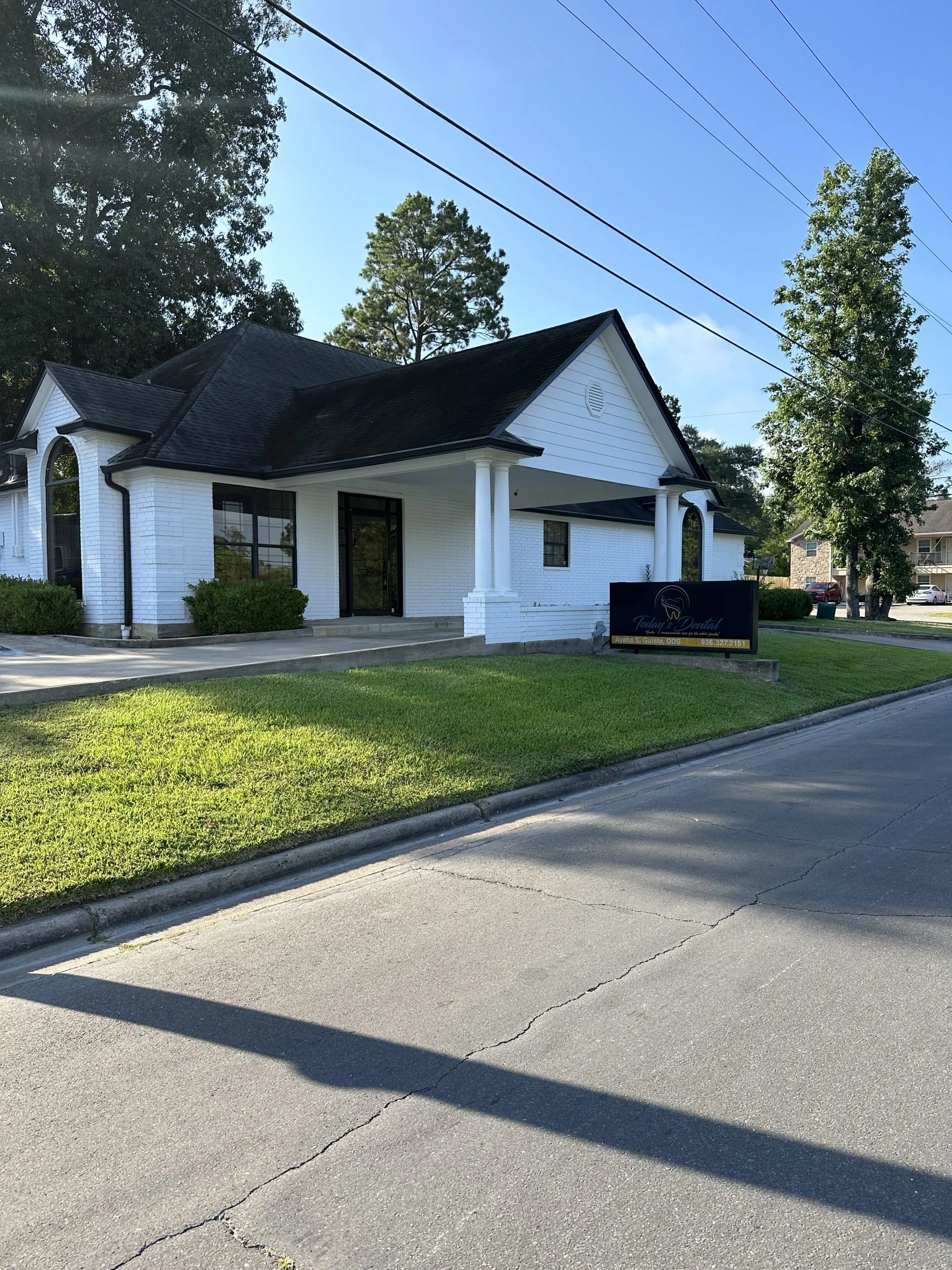
Care for older patients in Livingston
Dr. Guiste received focused training in the care of senior patients.
Replacing missing teeth with a full or partial denture
If you have lost all the teeth in your upper or lower jaw, a full denture replaces them. If some of your own teeth remain, a partial denture fills the gaps between them. Either one is fitted to your mouth and makes eating and speaking easier than with teeth missing.
Partial dentures fill the gaps between your teeth
A removable partial denture replaces one or more missing teeth in one area of your mouth. The replacement teeth sit on a gum-colored base, and some partials have a metal framework that holds the denture against the teeth around it.
When a tooth is lost and the space stays empty, the teeth beside it can shift. That can change your bite and, over time, damage your gums and jawbone. A partial denture replaces the missing teeth, helps you chew and supports the health of the rest of your mouth.
A partial is less invasive than a dental implant and usually costs less. Because it comes out and rests on your gums, it needs care for as long as you wear it: clean it every day, the same way you clean your natural teeth. A clean partial keeps your gums healthy and keeps the denture looking new.
How we make your partial denture
- We decide together whether a partial suits you. Your oral hygiene, where the gaps are, the strength of your jawbone and how well a denture is likely to serve you over the years all shape the plan.
- We take impressions of your teeth. They become the mold for your denture.
- We choose your new teeth with you. We go over the size, shape and color of each replacement tooth so it matches your natural smile.
- A dental lab makes a trial denture. We send your molds to the lab, and it returns a trial version for you to try.
- You try it at a fitting appointment. You see how it fits, looks and feels, and we adjust the fit or the color of the teeth. The lab makes those changes. Tell us honestly what you think, because your feedback shapes your final denture.
- The lab builds your final denture. At your last fitting we make small adjustments for comfort, bite and fit, here in our office.
Your first weeks with a new denture
A new denture can feel awkward for a few weeks. It may feel loose while the muscles of your cheeks and tongue learn to hold it in place, and some minor soreness is common at first. If soreness or irritation does not go away, call us and we will take a look.

Caring for your dentures at home
- Rinse your denture to remove loose food, then brush every surface each day with a soft-bristled brush and a non-abrasive cleanser.
- Each morning, before you put your denture in, brush your gums, tongue and the roof of your mouth with a soft brush.
- When you are not wearing your denture, keep it covered in water so it does not dry out or warp. Never put it in hot or boiling water.
- Keep the follow-up visits we strongly recommend, so we can clean your denture and check how it fits.
When your denture stops fitting
Your gums change shape over time, so a denture that once fit well can start to feel loose or rub. Adhesive does not fix a poor fit, and a loose denture can cause sores in your mouth. A denture that no longer fits may need to be relined or replaced.
Replacing teeth with dental implants
Dental implants are another way to replace missing teeth, and an exam shows whether they suit your mouth. If you have lost all the teeth in your upper or lower jaw, All-on-4 treatment is designed to give you a full arch of replacement teeth on four implants on the day of surgery, and some mouths need more than four.

Dry mouth and your medications
As you get older, cavities can come back even if you have not had one in years. A common cause is dry mouth. It is not a normal part of aging, but it is a side effect of more than 500 medications, including many for blood pressure, cholesterol, allergies, pain and depression. Bring a list of the medications you take, and we can suggest ways to ease a dry mouth and protect your teeth.
Your gums and oral cancer screenings
Gum disease is common in older adults and is often painless until it is advanced, and early oral cancer usually does not hurt. We check your gums at your visits, treat gum disease and offer oral cancer screenings.
Helping a parent or spouse with dental care
If you help someone you love with their daily care, two things matter most: reminders to brush and clean their teeth or dentures every day, and regular dental visits.
If they wear dentures and start eating less, or have trouble eating, the denture may be the cause. Bring them in, and we will check the fit.
Paying for your dentures
If you are one of our senior patients, you receive a discount on your denture treatment, listed with our current specials. Before treatment begins, ask us for an estimate of your costs, and see how we handle insurance and payment.