
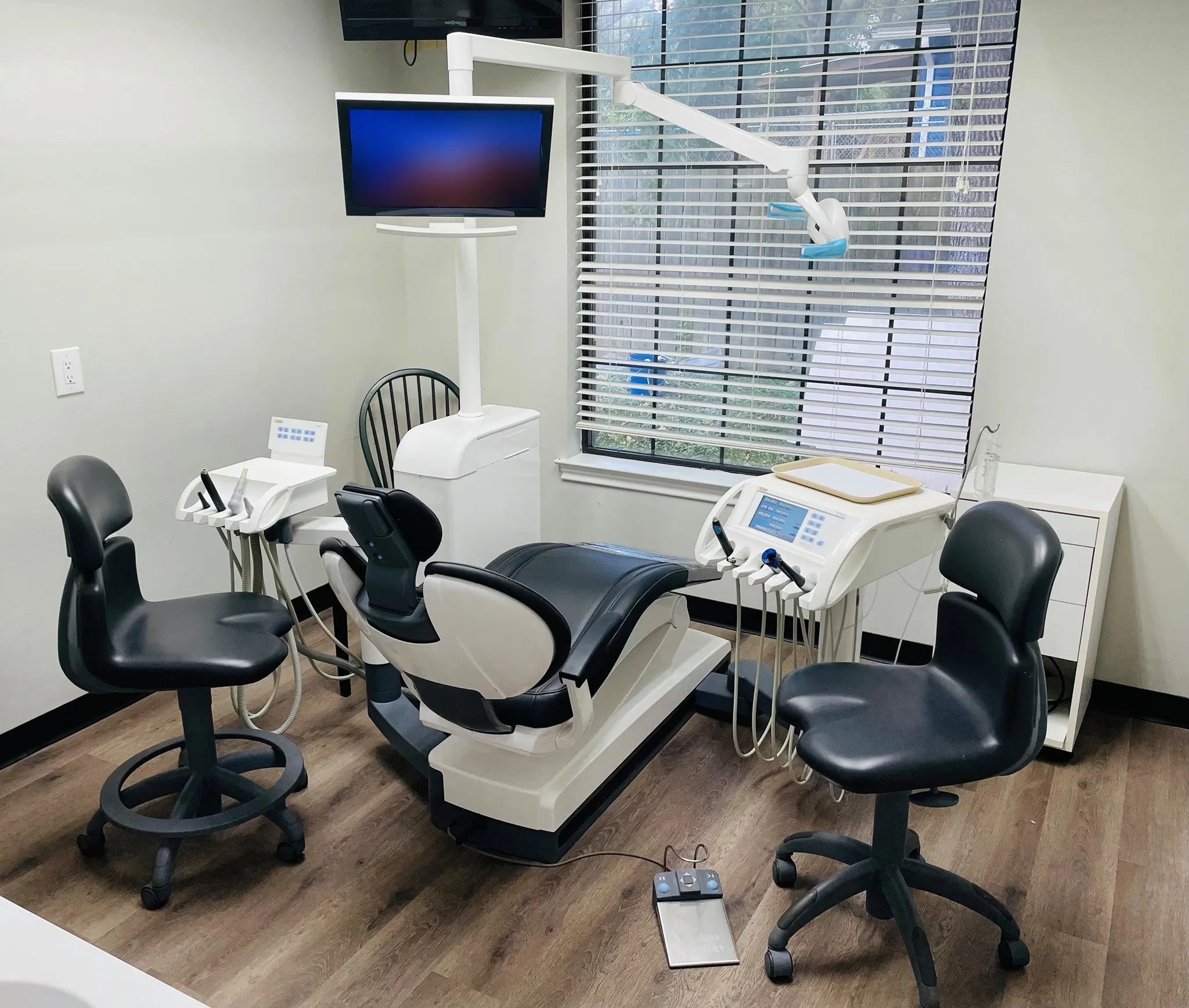
A 3D scan of your teeth, roots and sinuses

Our cone beam scanner takes a three-dimensional image of your teeth, roots, airway and sinuses in less than ten seconds. A view in three dimensions can show Dr. Guiste problems that flat x-rays alone may miss.

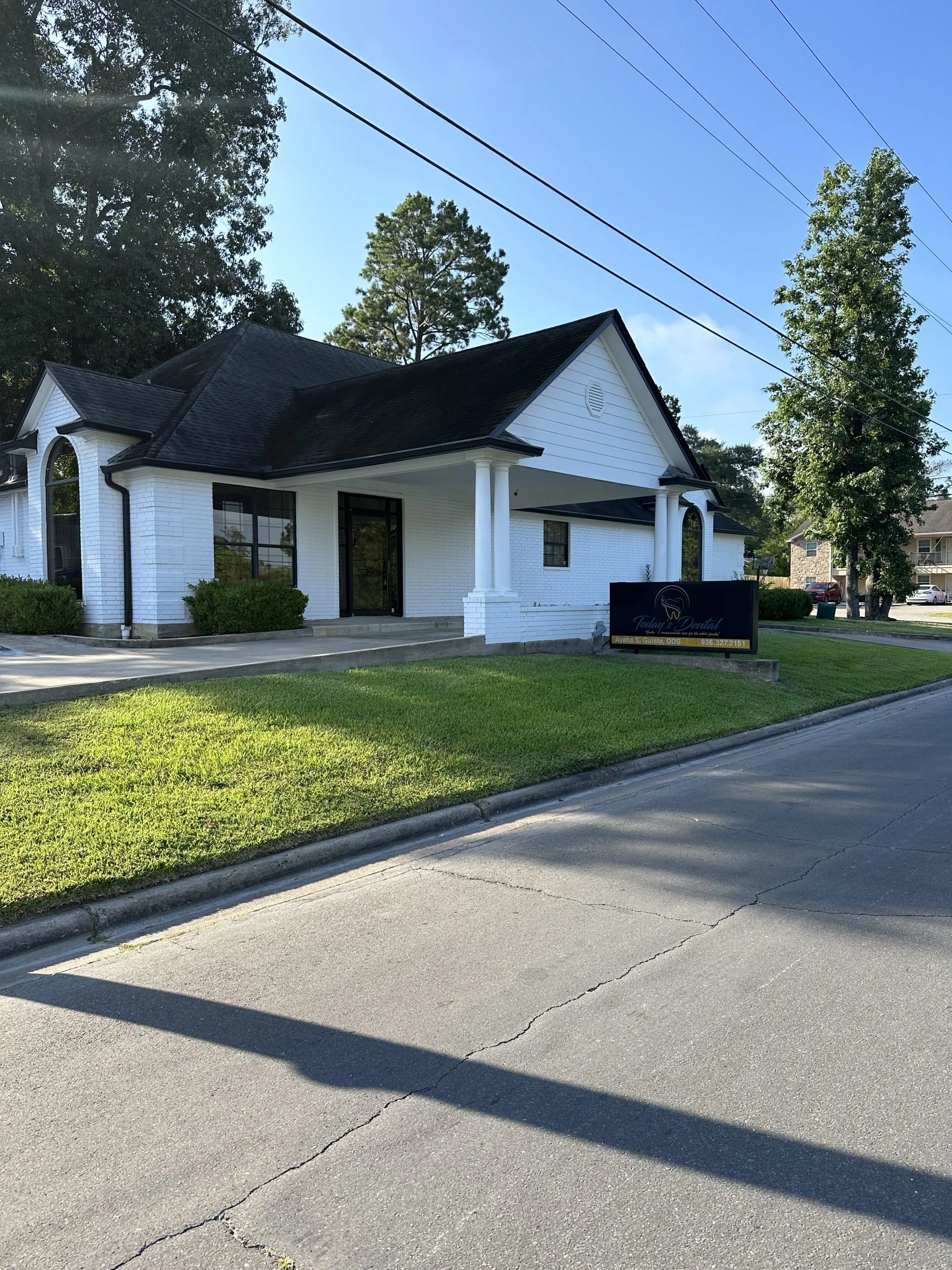
The Today's Dental office: a white brick building with a columned porch and the practice sign out front

The images are ready to view within seconds rather than minutes, so we can go over them with you while you are still in the chair, and your visit takes less time.

We also use the scanner to keep watch on jaw joint disorders, often called TMD or TMJ, which we treat as part of our general dentistry.

X-rays that show the inside of your teeth

X-rays show us what we cannot see by looking in your mouth: the inside of each tooth and the areas under your gums. They tell us which teeth are starting to get cavities, and which teeth or parts of your gums need more care.

Our x-rays are digital, so there is no film to develop, and digital x-rays reduce your exposure to radiation compared with film.

If you have had x-rays at another dental office in the last six months, ask that office to send them to us before your first visit, or pick them up and bring them with you.
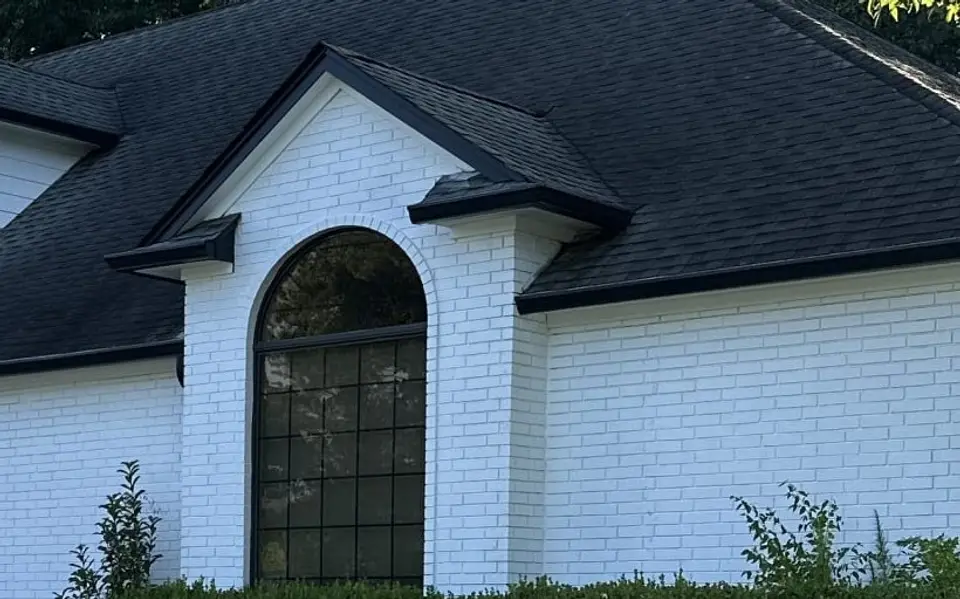
The arched window on the side of the Today's Dental office

Photos of your mouth that you can see

We take pictures with an intraoral camera, a small camera we hold inside your mouth, and show them to you, so you can see for yourself what we find.

The photos also help us follow a problem over time. Before and after pictures show how a treatment is working and whether you need more treatment or a different kind.

Elihu Guiste

If you are deciding on a larger procedure, the pictures show you parts of your mouth you could not see on your own.

Sources

The Today's Dental office seen from the street, with its lawn and driveway

Questions patients ask

How long does a cone beam 3D scan take?

The scan takes less than ten seconds, and the images are ready to view within seconds, so we can go over them with you at the same visit.

How much radiation is in a dental x-ray?

A small amount. The American Dental Association counts dental imaging as a minor part of the radiation people in the U.S. receive each year from all sources, natural and man-made. Our x-rays are digital, which reduces exposure compared with film.

Does a cone beam scan use more radiation than a regular dental x-ray?

Yes. A cone beam scan typically gives more radiation than a regular dental x-ray, and generally less than a medical CT scan. The FDA and the American Dental Association recommend any x-ray, including a 3D scan, only when it is needed to diagnose or treat a problem.

How often will I need dental x-rays?

There is no single schedule for everyone. How often you need x-rays depends on the health of your mouth, your age, your risk of disease and any symptoms you have. If you have a question about an x-ray we recommend, ask us at your visit.

Can I see the pictures of my teeth?

Yes. We take photos inside your mouth with an intraoral camera and show them to you, so you can see what we see. We also use them to compare before and after treatment.

Ashley, RDA, office manager

Tell us when you can come in

Send a request and we will call you back to find a time, or call or text us.